
A partnership, not a contract
SAD designs and carries buildings through to handover — master plans, architecture, engineering, expertise, site supervision. On some projects we go further: we become a co-developer and share the future growth in the asset's value rather than a fee.
- One responsibility
- instead of five separate contracts
- A share in the growth
- rather than payment for drawings
- Tashkent · Bali · GCC
- international standard, local delivery

Dream Villas, Canggu, Bali — a project where the studio acted as a co-development partner
One team, four ways in

Landowners
The plot sits there and does not work. What to build and what the land can carry is unclear — there are guesses, but no arithmetic.
We start with strategy and highest and best use — before the land is sold or committed to the wrong project.
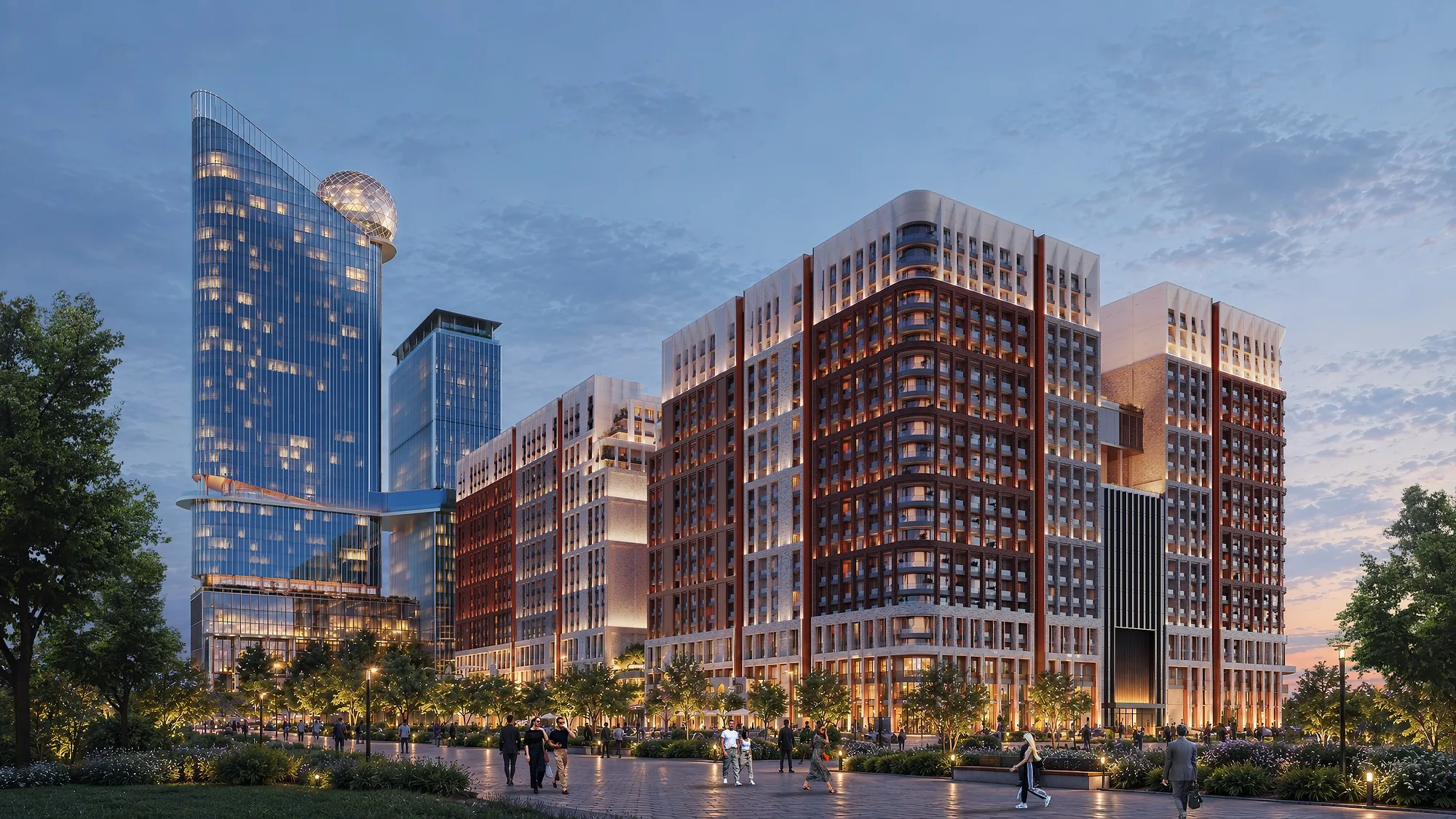
Developers
You need a product that answers a financial model — liquidity and margin without runaway CAPEX, not just a handsome facade.
Full co-development under one responsibility: product, architecture and cost control in the same hands.

Investors
Capital needs a calculated entry and a clear exit — sale, refinancing, yield, not an estimate by eye.
Feasibility in numbers first, then a partnership on terms you can see in advance.
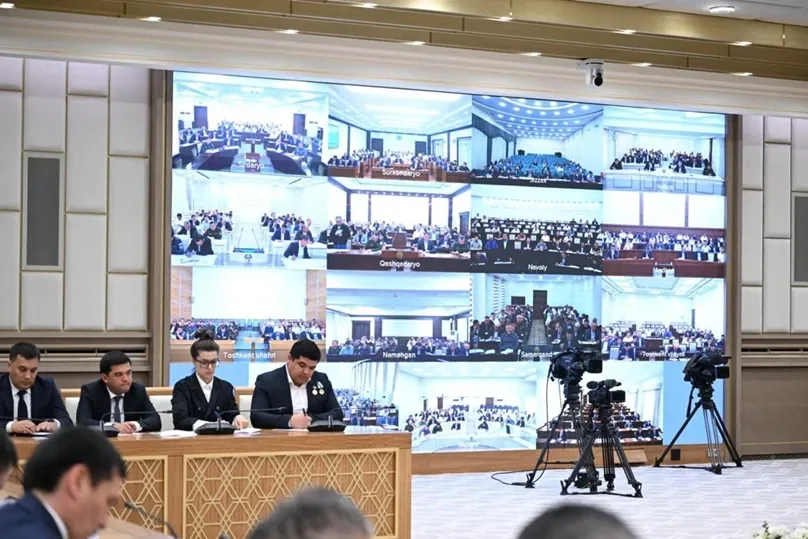
Government and institutions
An international standard that has to survive the local route to delivery — codes, expertise, real approval timescales.
Advisory, approvals and delivery to code — with a team that has been down that road already.
Where we worked out the product, not only the form
Both projects are on Bali. On both, SAD was answerable not only for the architecture but for what a building's returns are made of: typology, the product mix, differentiation in a crowded market.
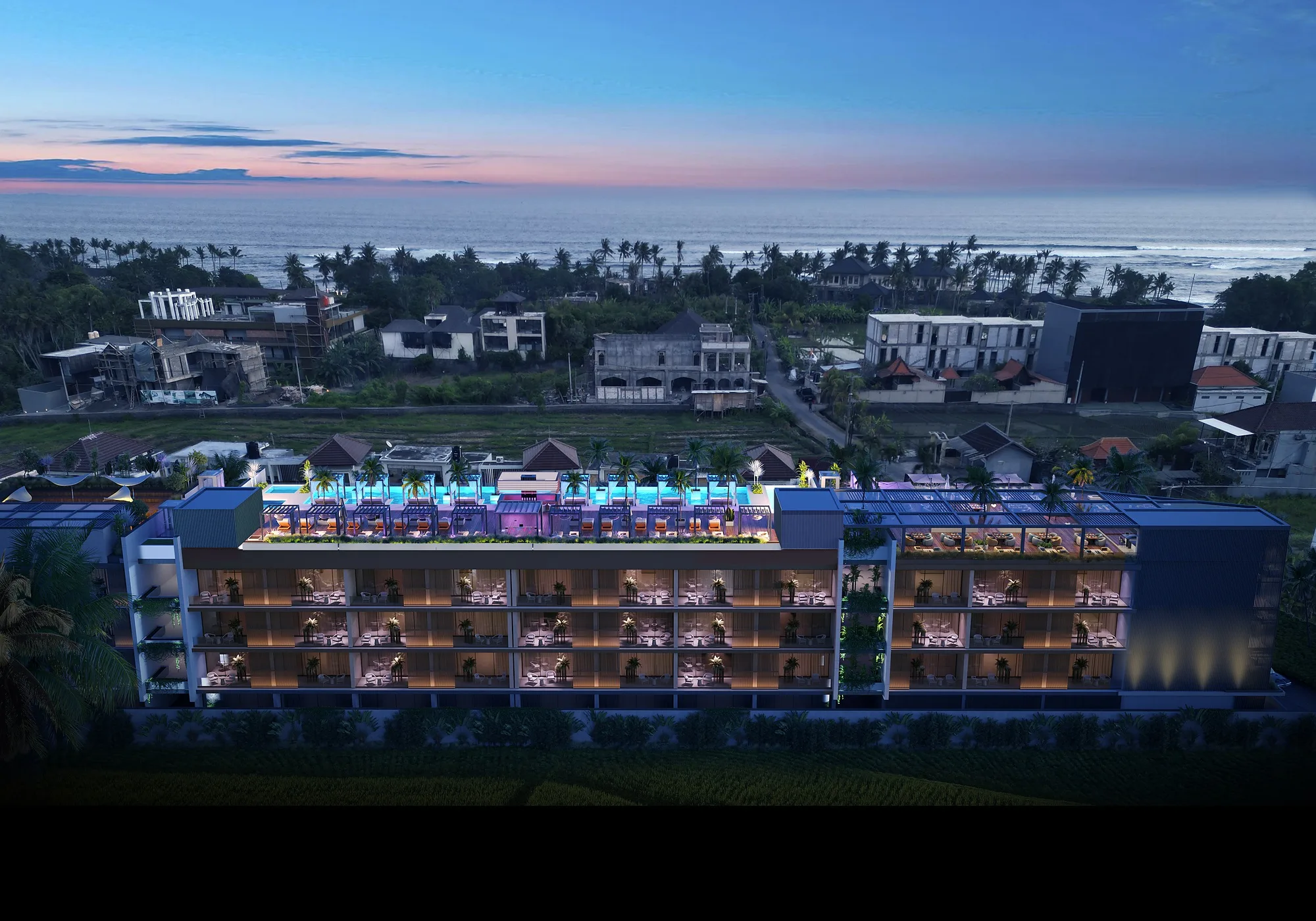
Residential complex · Bali, Cemagi
Cemagi
Three hundred metres from the ocean, 13,500+ m². A product mix rather than one kind of home: studio apartments and two- and three-bedroom villas, for different buyers and different letting models.
- 2024
- year designed
- 13,500+ m²
- total area
- Concept design
- stage
The co-development angle: the amenities — a 1,600 m² roof, restaurant, spa, open-air cinema — were counted as part of the product and its yield rather than as decoration.

Villa complex · Canggu, Bali
Dream Villas
A complex of eight villas on a 1,400 m² plot, 4 km from the beach. Each villa has two bedrooms, a double-height living room, its own pool, a courtyard and a roof terrace.
- 2023
- year designed
- 8
- villas in the complex
- 147.5 m²
- villa area
The co-development angle: each villa is built as a rental product — its own pool, courtyard and rooftop, with the living room opening onto the courtyard across its full width.
Four decisions, before the land is bought
Each of them takes a piece of risk out before money goes into the plot. The partnership and the division of roles are settled last — once it is clear what you are entering.
- 01
Site SWOT
Planning constraints, competition, transport and infrastructure — the land's strengths and weaknesses on one page, before it is bought.
- 02
Test fit
What physically fits on the plot: daylight, codes, parking, storeys — before the first facade is drawn.
- 03
Outline financial model
The economics in broad figures: revenue, cost, programme — whether the plot works at all.
- 04
Agreement and roles
The format of the partnership and the roles are fixed in a RACI matrix before the start, rather than talked through as work goes on.
The RACI matrix — who answers for what
What follows is an illustrative model for a typical project. On every deal the division is settled afresh, at a strategy session before the start.
- R
- Responsible — does the work
- A
- Accountable — answers for the result
- C
- Consulted — is asked
- I
- Informed — is kept posted
Only someone who can see a thing through can share the risk of it
Every figure below is not about the size of the company but about a particular piece of risk we are able to carry in a partnership.
- 30+ / 300+
- specialists in-house and in the international consortium
- Product, master plan and engineering inside one team, with nothing subcontracted out. Fewer people between a decision and its execution.
- 1.4M
- m² — our largest master plan, Oasis City
- Not only designed — carried through to approvable documentation. In co-development we share risk only where we can carry a project to a result rather than to a render.
- 2008
- founded
- Several full property cycles lived through. Only someone who has seen how a market behaves in a downturn can share risk years ahead.
- 2
- offices — Tashkent and Bali
- A different regulatory landscape, a different state, different rules — the same conversation with institutions your project will need.
Three ways of working together
The formats differ not only in the amount of work but in what you share: time on an advisory engagement, or a share in the growth of the project's value.
Strategic partner
For whom
There is land or an early project, and you need to know what to build and what it might cost before committing to anything.
What it covers
- Site strategy and highest and best use
- Product, positioning, financial logic
- A master plan answering the financial model
- A package for the bank and the investor
How we are paid
A fixed fee for the work — no share in the project.
Full co-development
For whom
Landowners and developers ready to share the future growth in value with a partner who takes on part of the risk alongside them.
What it covers
- Everything in format 01
- Architecture, engineering, BIM documentation
- State expertise, approvals, site supervision
- CAPEX control through to handover
How we are paid
A share in the growth of the project's value — not in the owner's existing business, but in what the work together brings into being.
Local partner / consortium
For whom
International architects, developers and funds working in the region.
What it covers
- Architect of Record, local delivery
- Codes, seismic design, expertise, stakeholders
- Market validation where there is no open data
- Assembling a consortium for a difficult brief
How we are paid
A fixed fee for local delivery.
Eighty hectares: a territory that became a city
Not every project is about partnership. Sometimes what matters is showing that we can work at a scale that redraws the map of a district rather than a plot.

An 80-hectare park city, Tashkent — A master plan carried through to approvable documentation
- Strategy → master plan → architecture
- SAD's role
- 1.4 m m²
- gross floor area
- 80 ha
- site area
The hierarchy of streets was designed before the facades — which means more active frontage and more liquid ground floors. Each phase of building strengthens the next rather than competing with it for demand; the plan protects the price years ahead.
At that scale decisions about product and phasing cost more than they do on a small plot — which is exactly where co-development brings the price of a mistake down the furthest.
What people ask before starting
What is co-development in architecture and development?
Co-development is a partnership in which an architecture practice enters a project as a co-owner of the result rather than a contractor on a fixed fee: part of the payment becomes a share in the future growth of the asset's value, not payment for drawings.
How does co-development differ from commissioning design?
With design you pay for a brief to be executed. With co-development we earn precisely when the project earns more than it would have without our part in the decisions about product and economics.
How is the share split between architect and developer?
Not a share in the existing business but a share in the growth: if the partnership helps the project sell for more or sooner, part of that growth — not of current revenue — becomes SAD's payment. The percentage and the format are settled at a strategy session for each project.
What is a RACI matrix and why does a development project need one?
RACI is a way of settling in advance who does the work (Responsible), who answers for the result (Accountable), who is asked (Consulted) and who is kept posted (Informed). In a partnership where several parties share responsibility for one asset, it goes into the contract.
At what stage can a partnership start?
At the earliest — when there are only the coordinates of a plot, or a hypothesis. We also take projects with a finished concept that needs testing against the economics before construction.
Does SAD work only in Uzbekistan?
No: the headquarters and most of the projects are in Uzbekistan, the second office is in Bali, and there are projects in the GCC. The local partner format is meant for teams entering the region from outside.
What do you need to discuss a project?
The coordinates of the plot, a brief, or an existing concept — in whatever form you have.

Tell us about the site or the project — we will say whether it suits a co-development model, and on what terms